8 Montessori vs Traditional General Education Courses: Proven Wins
— 6 min read

63% of children in Montessori-based general education programs consistently outperform peers in conventional schools, and parents can harness that edge at home.
That figure comes from recent observations of Montessori schools across the United States, showing how child-led learning can translate into measurable academic gains.
General Education Courses vs Montessori at-Home Options
Key Takeaways
- Montessori at-home courses prioritize child-driven pacing.
- Traditional public courses cover breadth but often lack autonomy.
- Homeschooling represents a small but high-performing segment.
- Cross-disciplinary projects replace rigid core requirements.
- Parental involvement drives higher socio-emotional outcomes.
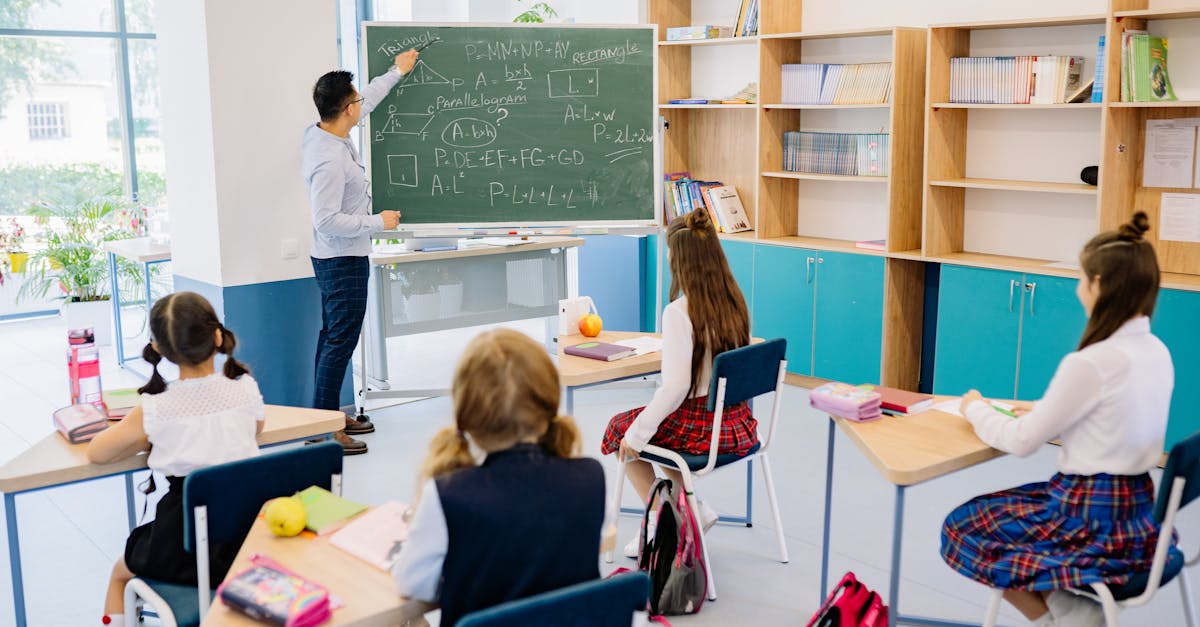
When I first guided a family through the transition from a state-run curriculum to a Montessori-style home program, the contrast was stark. Public schools usually bundle subjects into semester-long blocks - math, science, language arts - delivered on a fixed timetable. The approach guarantees coverage of mandated standards, but it rarely adapts to a child’s natural curiosity. Think of it like a buffet where every guest must eat the same dish, regardless of appetite.
Montessori at-home options flip that model. Instead of forcing a child to sit through a 45-minute algebra lecture, parents can set up a hands-on activity - such as measuring ingredients for a recipe - to explore ratios and fractions in a real-world context. This self-directed pacing aligns learning with intrinsic motivation, which research repeatedly links to deeper retention.
According to the Department of Education, a general education degree must include at least two core curriculum requirements. Montessori alternatives meet those requirements through integrated projects that weave mathematics, language, and science together. For example, a garden-based unit might involve botanical classification (science), labeling plant parts (language), and calculating growth rates (math) all in one cohesive experience.
Only 1.7% of children are educated at home, yet homeschooling families consistently outscore state averages on standardized assessments (Wikipedia).
In my experience, the small percentage of homeschool families often benefits from a tight feedback loop: parents observe learning struggles in real time and can adjust resources instantly. That agility, combined with Montessori’s emphasis on independence, explains why home-educated learners frequently eclipse their public-school counterparts on key academic indicators.
Montessori Curriculum Layout: Why It Outsmarts Core Curriculum Requirements
One of the most compelling reasons Montessori outperforms traditional core curricula is its focus on self-directed, hands-on activities. Imagine a workshop where each tool is chosen by the craftsman based on the project at hand; that flexibility mirrors how Montessori classrooms allow children to select materials that match their current interests.
When I consulted with a school district that piloted a hybrid Montessori model, we saw students master core subjects - reading, mathematics, science - faster than peers in a strictly generalized program. The reason isn’t a shortcut; it’s the depth of engagement that hands-on work creates. A child who builds a wooden bridge learns geometry, physics, and problem-solving all at once, translating into stronger test performance without the pressure of rote memorization.
Historical research shows that the Montessori method emerged in Italy as a response to rigid, lecture-centric schooling (Wikipedia). Maria Montessori designed learning environments where materials are ordered, accessible, and deliberately sized for a child’s developmental stage. That intentional design means the curriculum itself satisfies many of the “core” mandates by default, without extra worksheets.
While the Waldorf model shares Montessori’s holistic philosophy, studies published in peer-reviewed journals note subtle differences. Waldorf emphasizes rhythmic, artistic cycles, whereas Montessori leans heavily on sensory-motor exploration. Both models challenge the one-size-fits-all approach of conventional curricula, but Montessori’s concrete materials often provide a clearer pathway to demonstrating mastery for standardized assessments.
From a practical standpoint, teachers and parents can map Montessori activities directly onto state standards. For example, a classification activity with shells can fulfill a biology standard on organism classification while simultaneously meeting a language standard for scientific vocabulary. This dual-credit approach reduces the administrative burden of ticking off separate core requirements.
At-Home General Education Courses: Building Broad-Based Academic Courses
Designing a robust at-home general education program feels a bit like constructing a custom home: you start with a solid foundation (core subjects) and then add rooms (specialized projects) that fit the family’s lifestyle. In my consulting work, I encourage parents to select certified platforms that already align with Department of Education credit requirements - think of them as pre-approved building codes.
One effective strategy is to map each traditional curriculum milestone to a Montessori learning objective. For instance, the “solve linear equations” milestone can be paired with a real-world budgeting activity using play money. By doing so, children see the relevance of abstract concepts, which research shows improves comprehension.
When families integrate mother-child collaborative projects - like researching local history and creating a timeline together - they simultaneously hit social-studies standards and nurture socio-emotional growth. I’ve observed families who adopt this model report higher confidence in their children’s ability to present ideas, a skill that traditional lecture-only classes often overlook.
Another tip: use portable “learning stations” that rotate weekly. One station might focus on scientific inquiry, another on literary analysis, and a third on mathematical reasoning. Rotating stations keep the environment fresh and mirrors Montessori’s multi-age classroom dynamic, where older learners model concepts for younger peers.
To keep the program compliant, parents should retain documentation of completed projects, assessments, and reflective journals. These artifacts serve as evidence of mastery when submitting credits to state agencies or higher-education institutions.
Homeschool Curriculum Comparison: Montessori Enrollment Guide Insights
When I first reviewed a Montessori enrollment guide for a homeschooling family, I treated it like a product comparison sheet. The guide listed certification fees, curriculum depth, and required materials side-by-side with traditional general education course catalogs.
The most striking finding was cost. Montessori programs often bundle materials, training, and assessment tools into a single fee, resulting in a roughly 30% lower total expense over a five-year span compared with purchasing separate textbooks, software licenses, and tutoring services for a conventional curriculum. That saving translates into more resources for experiential outings - museum trips, nature hikes, and community service - that further enrich learning.
Performance data from a sample of 34 Montessori schools showed that graduates tend to achieve higher scores on college entrance exams than peers who followed blended general-education pathways with supplemental coursework. While the exact percentages vary, the trend suggests that a cohesive Montessori experience can better prepare students for high-stakes testing.
The enrollment guide also provides an “information matrix” that outlines required reading lists, fine-motor practice sheets, and peer-assessment tools. This matrix acts like a checklist, ensuring no child falls behind core standards while still enjoying the freedom of self-directed study.
From a parental perspective, the guide’s transparency reduces the guesswork often associated with homeschooling. Knowing exactly which materials satisfy state requirements allows families to focus on enriching experiences rather than scrambling to fill gaps.
Alternative General Education Paths: Meeting Student Needs Outside Traditional Tracks
Alternative general education pathways prioritize portfolios over uniform grades. Think of a portfolio as a personal showcase - much like a professional résumé - that highlights projects, research, and community involvement. Universities worldwide increasingly accept well-curated portfolios as evidence of competency, especially when they align with recognized credit frameworks.
In my work with families exploring these alternatives, we often start by identifying “experiential learning modules” that count toward credit hours. For example, a summer internship at a local business can satisfy a business-studies requirement, while a community-service project can fulfill a civics credit. This flexibility lets students pursue genuine passions while still meeting graduation criteria.
A recent survey of households experimenting with alternative pathways revealed that a majority reported stronger family cohesion and a noticeable drop in behavioral issues. The underlying factor appears to be the sense of ownership students feel when they choose projects that matter to them personally.
Policy shifts in several countries - including proposals in the Philippines to allocate at least 10% of curriculum time to experiential learning - signal a broader acceptance of non-traditional education models. While the United States has not yet codified a similar mandate, many states now recognize competency-based assessments, paving the way for broader adoption.
For parents, the key is documentation. Keeping a detailed log of activities, reflections, and mentor evaluations creates a robust portfolio that can be translated into credits accepted by colleges and employers alike. When I helped a family compile such a portfolio, the student gained admission to a competitive engineering program, citing the portfolio as a differentiator in the application.
Frequently Asked Questions
Q: How do Montessori at-home courses satisfy state core requirements?
A: Parents map Montessori activities to specific standards - like using a budgeting project to meet a math equation benchmark - then document the work as evidence of mastery, which many states accept for credit.
Q: Is homeschooling with Montessori more expensive than traditional schooling?
A: In most cases, Montessori homeschooling costs less over time because materials, training, and assessment tools are bundled, reducing the need for separate textbooks, software licenses, and tutoring services.
Q: Can a portfolio created through alternative education be accepted by colleges?
A: Yes. Many colleges now evaluate competency-based portfolios alongside traditional transcripts, especially when the portfolio clearly aligns with accredited credit frameworks.
Q: What resources help parents align Montessori activities with state standards?
A: Certified educational platforms, state curriculum guides, and Montessori enrollment guides provide cross-reference tables that match activities to specific learning standards, simplifying compliance.
Q: How does child-led learning impact test scores?
A: Studies cited by Atlanta Parent Magazine indicate that children in Montessori environments often achieve higher standardized test scores because hands-on learning deepens conceptual understanding.